
Powered By


The U.S. Food and Drug Administration (FDA) has authorized the Libre Duo 10 Day Continuous Dual Glucose Ketone Monitoring System for people ages 2 and older living with diabetes.
The device is the first wearable in the United States to continuously monitor ketones and the first in the world to continuously measure both glucose (blood sugar) and ketones with one device. It takes readings every minute and sends them to a compatible smartphone. It can also alert users when ketone levels reach a concerning threshold.
Ketones are acids the body makes when it breaks down fat for energy instead of using glucose. When ketones rise too high, they can contribute to diabetic ketoacidosis (DKA) — a serious complication that can develop quickly and requires prompt medical care.
Sign up to view the results!
 Continue with Facebook
Continue with Email
Continue with Facebook
Continue with Email
DKA is more common in type 1 diabetes than in type 2, but health experts agree people with type 2 diabetes should be aware of the risks.
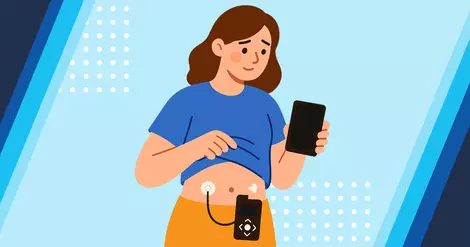
Libre Duo 10 Day is a wearable sensor system that measures glucose and ketones in interstitial fluid, the fluid just beneath the skin. It can collect this information day and night and send current readings and trend information to a compatible smartphone. This allows users to see whether levels are moving up or down.
Until now, people who needed to monitor ketones generally had to check them separately from glucose using a blood or urine ketone test. Those tests provide a reading at one point in time. Continuous monitoring may provide additional information about whether ketone levels are rising or falling.
The sensor is designed for up to 10 days of wear.
The authorization was based on clinical and performance data from six studies involving more than 600 participants ages 2 and older. The studies evaluated the accuracy of the system’s glucose and ketone monitoring across a range of levels.
According to the FDA, the device accurately tracked clinically meaningful differences in ketone levels during its 10-day wear period. The studies also showed that the system could identify elevated ketone levels before the onset of DKA.
That doesn’t mean the device has been shown to prevent DKA. The FDA said ketone readings should be considered together with glucose readings and symptoms. The device also doesn’t replace the steps in a person’s diabetes care or sick-day plan.

Not everyone with type 2 diabetes needs to monitor ketones. DKA is much more common in type 1 diabetes, but it can also occur in some people with type 2 diabetes, particularly when the body isn’t producing enough insulin. The risk can also be higher in people taking sodium-glucose cotransporter 2 (SGLT2) inhibitors, a class of diabetes medications.
For people whose healthcare team recommends ketone testing, tracking glucose and ketones together could provide more information than checking glucose alone. Continuous monitoring may also make it easier to see whether ketone levels are rising or falling over time rather than relying only on separate blood or urine checks.
The device won’t be the right fit for everyone, and FDA authorization does not mean everyone with type 2 diabetes should start monitoring ketones. Decisions about ketone monitoring or diabetes treatment should be made with a healthcare provider.
If you’re living with type 2 diabetes, ask your healthcare provider whether ketone monitoring should be part of your care plan, when you should check ketones, and what results should prompt you to take action.
Get updates directly to your inbox.




 Continue with Facebook
Continue with Email
Continue with Facebook
Continue with Email
Continue with Facebook
Continue with Email
Continue with Facebook
Continue with Email
Become a member to get even more





 Join
Join



 Your Privacy Choices

This is a member-feature!
Sign up for free to view article comments.
We'd love to hear from you! Please share your name and email to post and read comments.
You'll also get the latest articles directly to your inbox.