... — APMA Drug-Induced Nail Disease — DermNet ...
... If your CGM or sensor gives you an unusual reading, check it against a traditional finger stick test to be safe.Ease of Use: Which Is More User-Friendly? ...
... A 78-week study of adults taking basal insulin found that efsitora is as effective as daily insulin degludec, lowering A1c by 0.81 percentage points compared to 0.72 for daily insulin. Rates of moderate or severe low blood sugar were similar between groups. ...
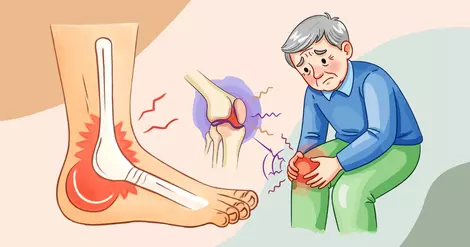
... Used to love walking, but I’ve lost the motivation.”Another described a structured week: “I work out … Mondays, Wednesdays, and Fridays. I do water therapy on Tuesday and Thursdays.”One member chose water-based movement because of pain: “Due to neuropathy, my feet and ankles swell and are very painful. ...
6 Great Ways To Move Your Body With Diabetes: Real Tips From Real People
... Used to love walking, but I’ve lost the motivation.”Another described a structured week: “I work out … Mondays, Wednesdays, and Fridays. I do water therapy on Tuesday and Thursdays.”One member chose water-based movement because of pain: “Due to neuropathy, my feet and ankles swell and are very painful. ...
... Make a note of any changes in your skin, nail, or joint shape and tell your doctor if you notice new or worsening issues.Common Treatment OptionsPhysical therapy is one of the main ways to manage joint pain and instability. ...
... Blisters and cuts can become ulcers if they are left untreated.You may find ulcers on different parts of your foot, including: The bottom of your foot Bony parts of your foot that press against your shoe or other surfaces The heel The areas between your toes The tips of the toes The nail bed Depending on your skin tone, ulcers may look pink, red, yellow ...
Blisters and Swollen Feet: How Diabetes Affects Your Skin and Circulation
... Blisters and cuts can become ulcers if they are left untreated.You may find ulcers on different parts of your foot, including: The bottom of your foot Bony parts of your foot that press against your shoe or other surfaces The heel The areas between your toes The tips of the toes The nail bed Depending on your skin tone, ulcers may look pink, red, yellow ...
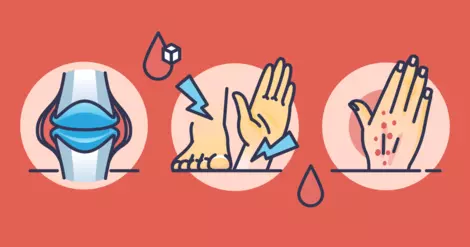
... PsA symptoms can appear at any time, but they most often start around 10 years after psoriasis first develops.Some common symptoms of psoriatic arthritis include: Fatigue Nail pitting Uveitis (red, painful, and irritated eyes) Reduced range of motion Swollen fingers and toes Tender and stiff joints and tendons (including the Achilles tendon) Back pain ...
Psoriatic Arthritis and Diabetes: What’s the Connection?
... PsA symptoms can appear at any time, but they most often start around 10 years after psoriasis first develops.Some common symptoms of psoriatic arthritis include: Fatigue Nail pitting Uveitis (red, painful, and irritated eyes) Reduced range of motion Swollen fingers and toes Tender and stiff joints and tendons (including the Achilles tendon) Back pain ...
... The general recommendation is 150 minutes of moderate-to-vigorous aerobic activity per week, plus two or three resistance training sessions.Workouts should be spaced throughout the week to keep your activity level up almost every day. ...
Type 2 Diabetes Self-Care: Diet, Exercise, and More
... The general recommendation is 150 minutes of moderate-to-vigorous aerobic activity per week, plus two or three resistance training sessions.Workouts should be spaced throughout the week to keep your activity level up almost every day. ...
... Dulaglutide and tirzepatide are both injectable medications, typically given once per week, that help lower blood sugar. Dulaglutide works by activating the same receptors as a hormone called glucagon-like peptide 1 (GLP-1). ...
... In general, adults with type 2 diabetes are advised to: Get at least 150 minutes of moderate to vigorous physical activity each week, spread over at least three days. Break up long periods of sitting by getting up and moving at least once every hour. Do resistance or strength training two or three days a week. ...
How Long Does It Take for A1c To Improve With Exercise and Diet?
... In general, adults with type 2 diabetes are advised to: Get at least 150 minutes of moderate to vigorous physical activity each week, spread over at least three days. Break up long periods of sitting by getting up and moving at least once every hour. Do resistance or strength training two or three days a week. ...











 Join
Join

 Your Privacy Choices