
Powered By


A new wearable sensor that tracks glucose levels (blood sugar) without using a needle has received clearance from the U.S. Food and Drug Administration (FDA). The Biolinq Shine sensor is the first of its kind designed for people living with type 2 diabetes who are not dependent on insulin. It’s expected to be available in 2026.
Sign up to view the results!
 Continue with Facebook
Continue with Email
Continue with Facebook
Continue with Email
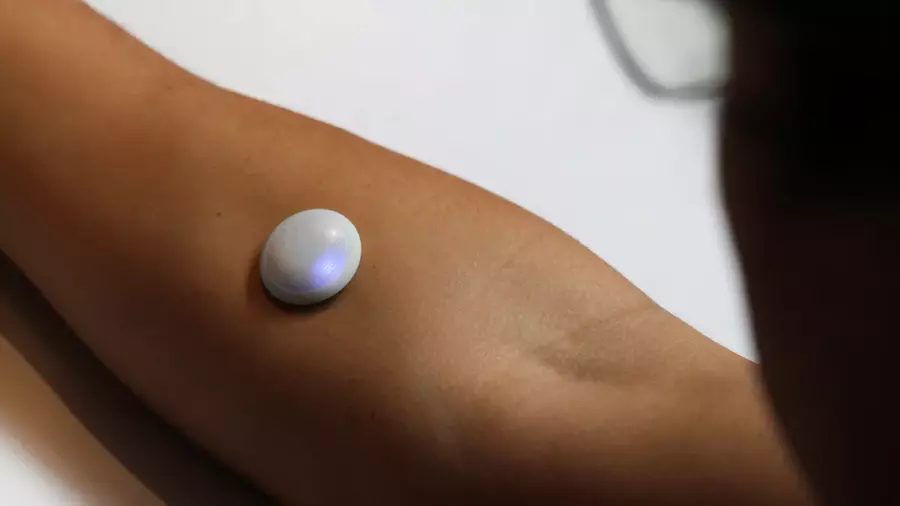
Traditional continuous glucose monitoring (CGM) systems use a small needle or filament to measure glucose in the fluid under the skin. In contrast, the Biolinq Shine uses a shallow array of tiny electrochemical sensors that don’t penetrate as deeply. About the size of a quarter, the device is worn on the forearm for five-day periods.
The device gives real-time feedback through a color-coded display. Instead of providing an exact number, the device lights up in different colors to let you know if your glucose is in range or high. A blue light means glucose levels are in range, while yellow signals high glucose.
While the sensor does not provide numerical readings or alarms, it may appeal to people who want a simple way to see if their glucose is in range, according to Dr. Anne Peters, professor of clinical medicine and director of clinical diabetes programs at the USC Keck School of Medicine in Los Angeles. “Many of our patients like seeing actual numbers, and I personally love seeing the numbers because I can really get a sense of glucose patterns. For people who really just want to see if they’re in a normal range much of the time, this is going to be helpful,” she told Medscape.
The device also tracks sleep and physical activity. Data is sent to a smartphone app for more detailed information. According to the company, future versions of the device may also monitor other health markers, such as lactate and ketones.
Many people with type 2 diabetes are not prescribed insulin, but they still need to manage their blood sugar to stay healthy. The Biolinq Shine may help people understand how meals, activity, and sleep affect their glucose levels, without the discomfort of needles or frequent finger sticks. More options for glucose monitoring could also help identify prediabetes early, before it develops into type 2 diabetes.
It’s important to know that this device isn’t meant for people who use insulin or who need highly accurate glucose readings and alerts. It’s for adults ages 22 and older.
If you’re interested in learning more about devices for monitoring glucose levels, talk with your diabetes care team.
On DiabetesTeam, members share their experiences with type 2 diabetes, get advice, and find support from others who understand.
Would a needle-free sensor make it easier for you to track your glucose? Let others know in the comments below.
Get updates directly to your inbox.


How much will these cost


 Continue with Facebook
Continue with Email
Continue with Facebook
Continue with Email
Continue with Facebook
Continue with Email
Continue with Facebook
Continue with Email
Become a member to get even more





 Join
Join



 Your Privacy Choices

This is a member-feature!
Sign up for free to view article comments.
Can't wait to try it. I hope it's affordable or covered by Medicare.
We'd love to hear from you! Please share your name and email to post and read comments.
You'll also get the latest articles directly to your inbox.